

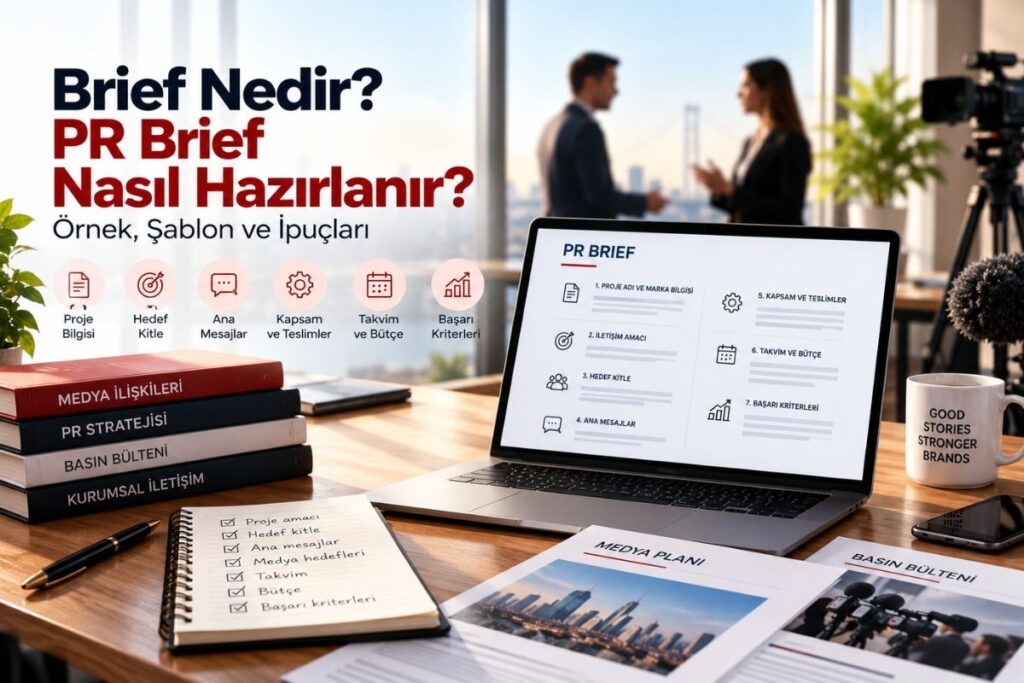
A media list is an organized database of journalists, editors, publications, and media contacts relevant to a public relations campaign. It helps PR professionals identify who covers a particular subject, select appropriate outlets, and deliver news to the people most likely to find it editorially relevant.
Learning how to build a media list involves more than collecting email addresses. An effective press list connects each contact with a specific audience, editorial beat, publication, and communication opportunity.
Whether you are preparing a product launch, entering a new market, or managing ongoing media relations, a well-researched media contact list can make your outreach more focused, manageable, and measurable.
This guide explains how to create a media list from scratch, what information to include, where to find relevant journalists, and how to use a practical media list template for your next PR campaign.
Key Takeaways
- A media list is a structured collection of journalists and publications selected for their relevance to a particular story.
- The best media lists prioritize editorial fit, audience relevance, and verified information over the number of contacts.
- A useful media list template includes publication details, journalist names, beats, contact sources, verification dates, and outreach status.
- PR professionals can build a media list using public sources without purchasing an expensive media database.
- Media lists should be reviewed regularly because journalists change publications, responsibilities, and contact preferences.
- A targeted press list supports personalized outreach, but inclusion does not guarantee media coverage.
What Is a Media List?
A media list is a database of media outlets and journalists that a business, PR agency, or communications professional may contact about relevant news.
It is sometimes called a press list, media contact list, journalist contact list, or PR media database.
Although these terms are often used interchangeably, they can describe slightly different resources.
| Term | Meaning | Primary purpose |
|---|---|---|
| Media list | A structured list of relevant journalists and outlets | Planning and executing PR outreach |
| Press list | A list of press contacts selected for announcements | Press release distribution and media pitching |
| Media contact list | Contact information for journalists and editorial teams | Managing professional media relationships |
| Media database | A broader collection of media profiles and contact records | Researching, filtering, and managing contacts |
| Media library | A collection of media assets such as images, videos, and documents | Providing content resources rather than journalist contacts |
A media list is different from a media library. The former identifies people and publications to contact; the latter stores materials such as approved photography, videos, logos, and press documents.
For example, a technology company announcing a new software platform might create a list containing technology journalists, enterprise software editors, business reporters, and industry publications.
A consumer food brand launching a product would require a different list, potentially including food journalists, retail reporters, consumer lifestyle publications, and relevant regional outlets.
The objective is to match the story with the journalists who cover its subject.
What Is a Media List in PR?
In public relations, a media list is an operational tool used to organize journalist research, plan outreach, track communication, and maintain relevant media relationships.
A public relations team may maintain several lists organized by industry, country, language, publication type, or campaign.
For example, an international PR agency might maintain separate contact groups for technology, finance, healthcare, manufacturing, and consumer products.
The list should help answer three questions:
- Which journalists cover the topic?
- Which publications reach the intended audience?
- Why would the announcement be relevant to each contact?
If these questions cannot be answered, the list probably needs more research.
Why Do PR Teams Need a Media List?
Media list building is an important part of public relations because journalists cover different subjects, serve different audiences, and follow different editorial processes.
A generic list of hundreds of contacts does not necessarily provide better outreach opportunities than a carefully researched list of relevant journalists.
1. More Relevant Media Outreach
A targeted media list helps communications teams avoid sending unrelated announcements to journalists.
For example, a reporter covering renewable energy policy may be interested in a company’s new energy research but not a general lifestyle product launch.
Editorial relevance should guide contact selection.
2. Better Journalist Relationships
Journalists are more likely to recognize the usefulness of communication that reflects their actual reporting interests.
Maintaining accurate information about beats, recent articles, and preferred contact methods supports professional, respectful outreach.
A media list also helps teams avoid repeatedly contacting journalists who have declined similar pitches.
3. More Efficient Campaign Management
A centralized list reduces duplicated research and makes responsibilities easier to coordinate.
Team members can see which contacts have been approached, when follow-up occurred, and whether a journalist requested additional information.
This becomes particularly useful when several PR professionals are working on the same announcement.
4. Stronger International PR Planning
Companies operating across several countries need to distinguish national, regional, and specialist media.
A contact who covers technology in the United Kingdom may not be suitable for an announcement intended specifically for Turkish business audiences.
Country-specific media research helps international brands adapt their communication strategy to local editorial interests.
5. More Meaningful Reporting
A media list provides a record of outreach activity.
It allows PR teams to compare the number of relevant contacts approached with responses, interview requests, and eventual coverage.
These figures should be interpreted carefully. A high response rate is useful, but the quality and relevance of resulting coverage matter more than contact volume alone.
How to Build a Media List in 7 Steps
To build a media list, start by defining the campaign audience, identify suitable publications, research journalists, verify contact details, organize the information, segment contacts, and maintain the database.
The following seven-step process can be used for corporate announcements, product launches, research campaigns, and international media outreach.
Step 1: Define Your PR Campaign Goals
Before researching journalists, establish what the campaign is intended to communicate.
Consider whether the objective is to announce a product, explain new research, introduce a company to a market, support an executive interview, or communicate a business partnership.
Each objective requires different media contacts.
For example, a company opening a manufacturing facility may target business, industrial, economic development, and regional news outlets.
A software startup announcing a cybersecurity study may prioritize technology reporters, cybersecurity specialists, and relevant enterprise publications.
Identify the intended audience, target geography, industry, announcement type, and desired editorial opportunities.
These criteria will determine which contacts belong on the list.
Step 2: Identify Relevant Media Outlets
Once the campaign objectives are clear, research publications that cover the subject.
Potential categories include:
- National newspapers and business publications
- Industry-specific trade magazines
- Regional and local news outlets
- Digital news websites
- Television and radio programs
- News agencies
- Relevant podcasts and professional publications
Evaluate each outlet based on editorial relevance rather than audience size alone.
A specialized manufacturing publication may be more suitable for an industrial announcement than a large general-interest website.
For campaigns targeting Türkiye, understanding the media landscape in Turkey can help distinguish national news agencies, business publications, regional outlets, and specialist media.
Create an initial shortlist of publications before searching for individual contacts.
Step 3: Research Journalists and Their Editorial Beats
A journalist’s beat is the subject area they regularly cover.
Common beats include technology, finance, healthcare, energy, manufacturing, retail, travel, and public policy.
Review recent articles to understand whether the journalist currently covers the relevant subject.
Useful research questions include:
- What topics has the journalist covered recently?
- Does the journalist report news, write analysis, or produce opinion pieces?
- Does the publication accept external story pitches?
- Is the journalist responsible for the target geographic market?
- Would the proposed announcement provide genuinely relevant information?
Do not assume that a journalist remains responsible for the same subject indefinitely.
Editorial roles can change, so recent work is often more informative than an outdated contact database.
Step 4: Find and Verify Media Contact Information
After identifying suitable journalists, locate an appropriate professional contact route.
Potential sources include publication websites, author biographies, newsroom contact pages, professional profiles, and official editorial submission instructions.
Some journalists publish professional email addresses or preferred pitching methods. Others direct inquiries through a newsroom or editorial desk.
Use the contact method provided for professional communication whenever possible.
Avoid assuming that an email address is correct based solely on a publication’s naming pattern.
If contact details cannot be verified, record the uncertainty rather than inventing an address.
A media list should also include the source and date of verification.
This makes it easier to review information before future campaigns.
Step 5: Organize Your Media List in a Spreadsheet or CRM
A spreadsheet is often sufficient for a small PR campaign.
Larger teams may use customer relationship management software or specialist media relations platforms.
Regardless of the tool, the database should be easy to search, filter, update, and share with authorized team members.
Create consistent fields for publication, journalist, editorial beat, country, contact information, relevance, and outreach status.
Avoid placing several unrelated details in one cell. Separate fields make filtering and reporting easier.
For example, a team should be able to filter the database to display technology journalists covering Türkiye whose contact information has been verified recently.
Step 6: Segment Your Media Contacts
Segmentation means dividing the list into groups based on characteristics relevant to the campaign.
Useful segments include:
- Industry or editorial beat
- Country or geographic market
- Publication type
- Language
- Audience
- Campaign relevance
- Existing relationship
- Outreach priority
A simple priority system can make the list easier to manage.
Priority A: Journalists whose recent coverage closely matches the announcement.
Priority B: Relevant journalists who cover a broader category.
Priority C: General editorial contacts or secondary publications that may have an appropriate interest.
Priority should reflect editorial relevance, not merely publication size.
A smaller specialist publication can be a higher-priority target than a major newspaper if its audience is better aligned with the story.
Step 7: Verify, Update, and Maintain Your Media List
A media list is not a one-time document.
Journalists change employers, publications adjust editorial responsibilities, and contact preferences evolve.
Before launching a campaign, review high-priority contacts and confirm that the information remains current.
Record bounced emails, incorrect details, opt-out requests, and other information that affects future communication.
Do not continue contacting people who have clearly asked not to receive pitches.
A useful maintenance process includes assigning responsibility for updates, recording verification dates, reviewing contact accuracy before campaigns, and removing records that are no longer necessary.
What Should a Media List Include?
A professional media contact list should contain enough information to identify a journalist, assess editorial relevance, and manage outreach responsibly.
The exact fields depend on the campaign and team size.
| Field | What to include | Why it matters |
|---|---|---|
| Publication name | Official outlet name | Identifies the media organization |
| Publication URL | Official website | Supports source verification |
| Journalist name | Professional name | Identifies the intended contact |
| Job title | Reporter, editor, producer, etc. | Clarifies responsibilities |
| Editorial beat | Topics covered | Helps assess story relevance |
| Country or region | Geographic coverage | Supports local targeting |
| Language | Primary working language | Supports appropriate communication |
| Professional email | Verified business contact, where available | Enables outreach |
| Contact source | Author page, newsroom page, etc. | Makes verification easier |
| Recent relevant article | Link to related coverage | Supports personalized pitches |
| Priority | A, B, or C | Organizes outreach |
| Last verified | Date information was checked | Helps maintain accuracy |
| Outreach status | Not contacted, pitched, replied, etc. | Prevents duplication |
| Notes | Relevant editorial preferences | Supports relationship management |
Not every field must be completed for every contact.
A record containing a relevant publication and verified newsroom submission page may still be useful even when an individual journalist’s email is unavailable.
However, incomplete records should not be presented as verified contacts.
Media List Template and Example
A media list template gives PR professionals a consistent structure for collecting and managing journalist information.
The following example uses fictional contacts to demonstrate how a spreadsheet can be organized.
Example Media List for a Technology Product Launch
| Publication | Contact | Beat | Country | Contact Route | Priority | Status |
|---|---|---|---|---|---|---|
| Example Tech Review | Alex Morgan | Enterprise technology | UK | Verified author page | A | Not contacted |
| Business Insight Daily | Jordan Lee | Business and innovation | US | Newsroom submission page | B | Not contacted |
| Digital Industry Journal | Taylor Reed | Software and cybersecurity | UK | Verified professional contact | A | Research complete |
| Regional Business Report | Casey Brooks | Regional business | US | Editorial desk | B | Not contacted |
| Global Technology Weekly | Sam Parker | Technology trends | International | Publication contact page | C | Verification pending |
Illustrative example only. All publication and journalist names in this table are fictional.
The table demonstrates how editorial relevance, geography, priority, and outreach status can be recorded without inventing personal email addresses.
Copyable Media List Template
Use the following header row in Excel or Google Sheets:
Publication Name,Publication URL,Journalist Name,Job Title,Editorial Beat,Country,Language,Professional Contact,Contact Source,Relevant Article URL,Priority,Last Verified,Outreach Date,Outreach Status,Follow-Up Date,Notes
A practical spreadsheet can use dropdown menus for priority and outreach status.
For example, outreach status options may include:
- Researching
- Verified
- Ready to pitch
- Pitched
- Replied
- Additional information requested
- Declined
- Coverage published
- Do not contact
Keep contact verification separate from outreach status. A journalist may be verified but not yet contacted.
How to Customize the Template
A small company preparing one announcement may only need a limited number of fields.
An agency managing multiple clients should also consider adding campaign name, account owner, client, approval status, and reporting reference.
International PR teams may require separate fields for time zone, local language, market, and regional media classification.
The best template is one that team members can maintain consistently.
Adding dozens of fields provides little value if the information is never reviewed or used.
How to Find Relevant Journalists
Journalist research is one of the most important stages of media list building.
Finding a professional contact address is useful, but understanding editorial relevance is more important.
Search Publication Websites
Start with the publications identified during the outlet research stage.
Look for author pages, newsroom directories, staff biographies, contact sections, and recent articles.
Author pages may reveal a journalist’s current role and reporting subjects.
Review several articles rather than relying on a single headline.
A journalist who occasionally mentions artificial intelligence may not regularly cover enterprise AI products.
Use Search Engines to Research Editorial Coverage
Search engines can help identify journalists writing about a particular topic.
For example, a PR professional researching renewable energy media could search for recent articles about solar investments, energy storage, or industrial decarbonization.
Useful search patterns include:
site:example.com renewable energy
site:example.com "cybersecurity" "reporter"
"manufacturing investment" journalist
Replace the example domain and subject with the relevant publication and campaign topic.
Search results should be checked against the original publication before a contact is added.
Review Professional Profiles
Professional networking profiles and publicly available journalist biographies can help confirm current roles and areas of expertise.
Use them to verify professional information, not to collect unrelated personal details.
If a journalist has published a preferred pitching channel, follow that guidance.
Consider Specialist Media Databases
Media research platforms can help PR professionals search publications, identify journalists, and organize contact information.
These tools may reduce research time, especially for teams working across several industries or countries.
However, database access does not eliminate the need to verify editorial relevance and current contact details.
Even a paid database can contain outdated information.
Build Relationships Through Relevant Coverage
Media research should be continuous.
Track journalists who publish thoughtful articles about subjects relevant to the organization.
Read their work and understand the questions they regularly explore.
Over time, this creates a more useful contact database than collecting names immediately before each campaign.
How to Build a Media List Without Paid Tools
You can create a media list without purchasing a specialist media database.
A manual approach requires more research time, but it can be practical for small campaigns and narrowly defined industries.
Start With a Focused Publication List
Identify publications that serve the intended audience.
For example, a company announcing an industrial investment might begin with relevant manufacturing, business, and regional publications.
Avoid starting with hundreds of general news outlets.
Research Publicly Available Information
Use publication websites, author pages, editorial directories, and official professional profiles.
Record the source of each contact.
If an individual journalist’s contact details are not publicly available, use the publication’s official newsroom contact route where appropriate.
Use a Spreadsheet
Google Sheets or Excel can support a basic PR media list.
Create filters for editorial beat, country, priority, and outreach status.
Assign one person responsibility for maintaining the data.
Verify Before Sending
Before outreach, confirm that priority contacts still work at the relevant publication and cover the intended subject.
A smaller verified list is more useful than a large unverified one.
Review the Results
After the campaign, record responses, requests for information, and relevant coverage.
Use the findings to improve the next list.
This approach can gradually create a reliable internal media resource.
Media List Building for Press Release Distribution
A media list and a press release serve different purposes.
The press release contains the announcement. The media list identifies the journalists and publications that may find it relevant.
Effective distribution connects the two.
For example, a company announcing a new industrial facility may prepare a release containing the investment details, location, timeline, executive comments, and confirmed business information.
The media list would then identify appropriate business, industrial, regional, and trade publications.
The next step is to prepare outreach that explains why the announcement matters to each audience.
PR teams planning a campaign can follow PRTURKEY’s guide to distributing a press release for a broader explanation of direct outreach, distribution channels, timing, and monitoring.
Prepare Your Press Materials Before Outreach
Journalists may need additional information before evaluating an announcement.
Prepare supporting documents such as a company fact sheet, executive biography, relevant photographs, and approved product information.
A press kit example and preparation guide can help organize these materials.
The media list should identify who may need the materials, while the press kit makes the information accessible.
Personalize High-Priority Pitches
A media pitch should explain the story’s relevance without forcing the journalist to read an unrelated promotional introduction.
A simple structure includes:
- A concise subject line.
- A short explanation of the announcement.
- A clear reason it is relevant to the journalist’s coverage.
- Supporting facts or evidence.
- An accessible link to additional information.
- A professional media contact.
Personalization should be based on genuine editorial relevance.
Mentioning a journalist’s recent article can be useful when the connection is substantive, but superficial references should be avoided.
Track Responses and Follow-Up
Record outreach dates and responses in the media list.
Follow up selectively when the story remains relevant and the publication’s contact preferences allow it.
Repeatedly sending the same message without new information is unlikely to improve the quality of a professional media relationship.
How to Build a Media List for International PR Campaigns
International media list building introduces additional considerations, including language, geography, publication type, and local editorial practices.
A global list should not be treated as one undifferentiated collection of contacts.
Organize Contacts by Country
Separate contacts according to the countries or markets relevant to the announcement.
This helps teams avoid sending information about local product availability or operations to audiences where the announcement does not apply.
Consider Language and Local Context
A translated press release may still require localization.
The journalist needs to understand why the announcement matters in the local market.
For example, a brand entering Türkiye may need to explain local availability, distribution, investment plans, or the significance of a new partnership.
The media list should reflect those local story angles.
Segment National, Regional, and Trade Media
National business publications may focus on the overall market implications of an announcement.
Regional outlets may prioritize employment, investment, or local economic activity.
Trade publications may need detailed industry information.
Each group may require a different pitch even when the underlying announcement is the same.
Work With Local Media Expertise When Necessary
An international brand may not have the internal resources to research every local media market.
A specialist partner can support outlet identification, local relevance, journalist research, distribution, and monitoring.
PRTURKEY’s international press release service includes country- and sector-focused distribution, media database access, and reporting support.
The objective is to identify appropriate media opportunities and maintain accurate communication, not to guarantee independent editorial coverage.
Common Media List Building Mistakes
Several mistakes can reduce the usefulness of a press list.
Collecting Too Many Irrelevant Contacts
A large list may look impressive, but it does not establish campaign quality.
Contacts should be selected according to the story, audience, and publication.
Using Outdated Information
Journalists frequently change roles or publications.
Outdated contact details can create failed outreach and undermine the reliability of reporting.
Include verification dates and review priority contacts before campaigns.
Ignoring Editorial Beats
A journalist’s publication alone does not establish relevance.
A large newspaper may employ separate reporters for finance, politics, technology, and consumer affairs.
Research the individual journalist’s coverage before pitching.
Sending Identical Pitches to Every Contact
Different publications serve different audiences.
A technical publication may need detailed product specifications, while a business publication may focus on investment or commercial implications.
Use the media list to support appropriate segmentation.
Failing to Track Communication
Without outreach records, multiple team members may contact the same journalist or repeat a pitch that has already been declined.
A shared status field helps prevent unnecessary duplication.
Confusing Syndication With Editorial Coverage
A press release distributed through a network may appear on several websites.
This is not necessarily equivalent to independent reporting by journalists.
PR reporting should distinguish distributed placements, syndicated announcements, and original editorial coverage.
Ignoring Privacy and Contact Preferences
Professional contact information should be handled responsibly.
Collect only information needed for legitimate professional communication, follow applicable privacy and electronic communications requirements, and respect requests not to be contacted.
Avoid adding personal telephone numbers or unrelated private details simply because they can be found online.
How to Keep Your Media List Updated
A useful media list requires ongoing maintenance.
Create a review process that fits the organization’s communication frequency.
For an active PR team, high-priority contacts may need verification before each significant campaign.
Less frequently used records can be reviewed when they become relevant again.
Establish Clear Ownership
Assign responsibility for database accuracy.
If several team members can edit the list, use consistent naming rules and status definitions.
Record Verification Dates
A contact record should indicate when the information was last checked.
This helps distinguish recently verified details from older records that require review.
Remove Invalid or Unnecessary Records
Update bounced addresses, outdated roles, and incorrect publication details.
Remove information that is no longer necessary or should not be retained.
Review Campaign Performance
After outreach, evaluate which segments produced relevant responses and coverage.
For example, a campaign may receive stronger engagement from specialist publications than from general-interest outlets.
That finding can inform future media research.
The purpose is not to contact the same journalists more frequently. It is to improve the relevance of future communication.
How to Measure Media List Effectiveness
Media list effectiveness should be assessed through both operational accuracy and communication outcomes.
| Metric | What it indicates |
|---|---|
| Contact verification rate | Proportion of records checked for accuracy |
| Email delivery failures | Potentially invalid contact information |
| Relevant journalist responses | Interest from appropriately selected contacts |
| Interview requests | Opportunities for additional editorial discussion |
| Independent media coverage | Original reporting resulting from the announcement |
| Message accuracy | Whether important information was reported correctly |
| Publication relevance | Fit between coverage and intended audience |
| Referral traffic | Website visits attributable to linked coverage |
These metrics should not be interpreted in isolation.
For example, a campaign with relatively few responses may still achieve its objective if a specialist publication produces a detailed and accurate article reaching the intended audience.
Conversely, a high number of distributed placements may not indicate strong earned media performance.
PR teams should establish campaign objectives before selecting measurement criteria.
Frequently Asked Questions
How do I create a media list?
To create a media list, define your campaign goals, identify relevant publications, research journalists covering the subject, verify professional contact details, and organize the information in a spreadsheet or media database. Segment contacts by relevance and update the list before each major outreach campaign.
What is a media list?
A media list is an organized database of journalists, editors, publications, and professional media contacts used for public relations outreach. It helps communications teams identify relevant audiences, manage media pitches, and track responses. A useful media list includes editorial beats, contact sources, verification dates, and outreach status.
What should a media list include?
A media list should include publication names, journalist names, editorial beats, geographic markets, verified professional contact routes, and relevant article references. It should also contain outreach status, priority, and verification dates. Additional fields may be useful for international campaigns or teams managing several clients.
How do I build a media list without a media database?
Start by identifying relevant publications through search engines and industry research. Review official author pages, newsroom directories, and professional profiles to identify suitable journalists. Record verified information in Excel or Google Sheets, organize contacts by editorial relevance, and review the details before outreach.
What is the difference between a media list and a press list?
The terms are often interchangeable. A press list generally refers to journalists and editorial contacts selected for news announcements, while a media list may include a broader range of publications, journalists, producers, and other relevant media professionals. Both support targeted communication and media relationship management.
What is a media contact list?
A media contact list is a collection of professional contact information for journalists, editors, and media organizations. It may include names, publications, beats, email addresses, and official contact pages. When used for PR outreach, it should also record editorial relevance, contact sources, and communication history.
What is a media list template?
A media list template is a predefined spreadsheet or database structure used to organize media contacts consistently. Typical columns include publication name, journalist, beat, country, professional contact, priority, verification date, and outreach status. Templates make research easier to manage and support consistent reporting.
How often should a media list be updated?
There is no universal update interval. High-priority contacts should be verified before significant campaigns, while less frequently used records can be reviewed when needed. Updates are also necessary when journalists change roles, emails fail, or contacts request that their information be changed or removed.
How many journalists should be on a media list?
There is no ideal number. A narrowly focused campaign may need a small group of specialist journalists, while an international announcement may require several segmented lists. The number should follow the communication objective and relevant media landscape rather than an arbitrary target.
How do you find journalists for a media list?
Research publications covering your industry, review recent articles, identify journalists responsible for the relevant beats, and consult official professional contact information. Record a recent article that demonstrates relevance. Prioritize current editorial responsibilities rather than relying solely on job titles or database categories.
What does ### mean in journalism?
In traditional press release formatting, three hash marks (###) commonly indicate the end of a press release. The symbol tells the reader that the announcement text has concluded. It is a formatting convention, not a requirement for building a media list.
What is the difference between a media list and a media library?
A media list contains journalists, publications, and professional outreach information. A media library stores content assets such as photographs, logos, videos, audio files, and documents. A PR campaign may use both: the media list identifies recipients, while the media library provides supporting materials.
Conclusion
Learning how to build a media list is an essential part of effective public relations planning.
A strong media list is not defined by the number of journalists it contains. Its value comes from editorial relevance, verified information, clear segmentation, and responsible relationship management.
Start with the campaign objective, research appropriate publications, identify journalists whose work matches the story, and maintain accurate outreach records. Use a practical media list template to make the process consistent and repeatable.
For organizations entering new markets, local media knowledge and country-specific research become especially important.
PRTURKEY supports international brands with media targeting, press release distribution, and reporting services designed for communication in Türkiye and other markets.
Explore PRTURKEY’s press release distribution and digital PR services to learn more about planning relevant media outreach.