

Writing a press release is easy. Writing one that a Turkish editor actually opens, reads, and decides to run is much harder. Most releases that fail don’t fail because the news wasn’t interesting — they fail because of avoidable mistakes in how the release was written, targeted, or sent.
Here are the five we see most often, and how to fix them.
1. Leading With Company News Instead of Reader Value
A release that opens with “[Company Name] is proud to announce…” tells the editor this is marketing, not news. Turkish journalists — like journalists everywhere — are looking for a story that matters to their readers, not a company milestone dressed up as one.
Fix: Lead with the impact. What changes for customers, the industry, or the market? Save the company introduction for the second paragraph.
2. Direct Translation Instead of Localization
One of the fastest ways to lose credibility with Turkish media is sending a release that reads like it was translated word-for-word from English. Sentence structure, idioms, and even what counts as “newsworthy” differ between markets.
Fix: Have the release written or fully adapted by someone fluent in Turkish business journalism, not just the language. The goal is a release that sounds like it was written for a Turkish newsroom, not converted into one.
3. Sending to a Generic, Untargeted Media List
Blasting a release to hundreds of outlets regardless of relevance is one of the most common reasons pickup rates stay low. Editors can tell when a pitch clearly wasn’t meant for their beat, and it damages your credibility for future pitches too.
Fix: Build (or work with a partner who maintains) a media list segmented by sector and outlet type — trade press, national business media, regional outlets — and tailor the pitch angle to each.
4. No Newsroom or Digital Home for the Story
Even when a release earns coverage, many brands have nowhere for interested readers — or journalists doing follow-up research — to go afterward. Without an on-site newsroom, you lose the SEO value of the story and make it harder for press to verify facts or find supporting assets.
Fix: Maintain an always-on newsroom or press room on your own site with past releases, brand assets, and contact details, so every distributed release has a permanent, indexable home.
5. Treating Distribution as a One-Way Broadcast
Many brands send a release and consider the job done. But distribution without any follow-up rarely gets rer-read priority in a crowded inbox.
Fix: Follow up with key journalists individually, offer additional context or interview availability, and track which outlets engaged — so future pitches can be even better targeted.
If you can’t say whether your last release actually moved the needle, you’re not alone — see how to measure brand awareness after a PR campaign to fix that before your next one.
Getting the Fundamentals Right First
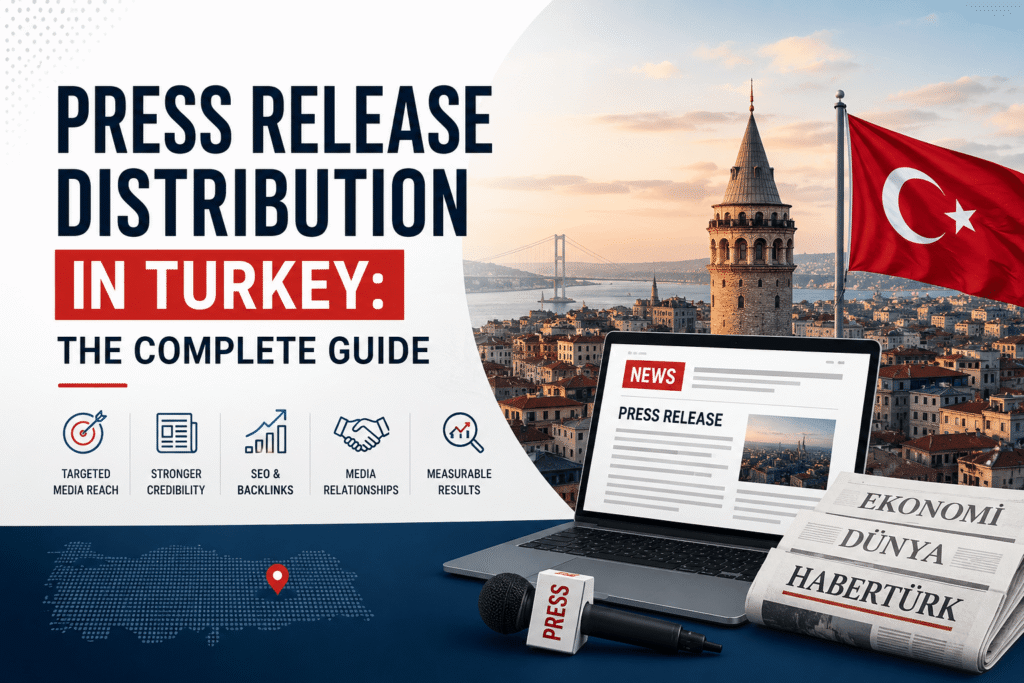
Fixing these five issues won’t guarantee coverage, but skipping them almost guarantees you won’t get it. Before your next release goes out, it’s worth revisiting the fundamentals of how distribution actually works in the Turkish market — we cover that in full in our Complete Guide to Press Release Distribution in Turkey.
PRTURKEY works with brands to write, localize, and distribute press releases that are built for how Turkish media actually works — backed by a curated journalist database and an always-on newsroom.